Articles · Research
Optimizing Investment Decision-Making: Beating Bias with Process, Not Just Judgment
The quality of an investment decision lives in the process that produced it, not the outcome. A practitioner's guide to the biases that distort investing — confirmation, base-rate neglect, the halo effect — and the structured countermeasures that work: reference classes, premortems, decision journals, and a recorded IC rationale that lets a firm learn from its own track record.

Most firms try to improve their investing by improving their judgment — hiring sharper partners, seeing more deals, debating harder in the room. That helps, but it has a ceiling, because the human mind brings the same predictable distortions to every deal no matter how experienced the operator. The more durable lever is process: the structure around a decision that catches the errors judgment alone cannot see in itself. This is a practitioner's guide to the biases that quietly degrade investment decisions, and the small set of countermeasures — reference classes, premortems, decision journals, and a recorded committee rationale — that demonstrably improve them.
The reframe underneath all of it: a good decision is not one that turned out well. In a domain as noisy as venture, a sound process can lose and a reckless bet can win. The only thing you control is the quality of the decision at the moment you made it — so that is what you should measure, record, and try to improve.
The biases that distort investment decisions
The behavioral-economics canon — Kahneman and Tversky's work on heuristics, popularized in Thinking, Fast and Slow — is not academic trivia for investors. It is a field guide to the specific ways a smart team talks itself into the wrong deal. Three failure modes do most of the damage.
Confirmation bias is the tendency to seek and weight evidence that supports a belief you already hold, while discounting what contradicts it. Once a partner is excited about a company, diligence quietly turns from a search for truth into a search for justification — every good reference confirms the thesis, every bad one is "an outlier." As one investor education resource puts it, confirmation bias leads investors to overestimate potential gains and underestimate risks, and to hold losing positions too long waiting for a rebound the original thesis predicted.
Base-rate neglect is the one that costs venture firms the most money. Kahneman and Tversky showed that people judge probability by representativeness — how much a case resembles a prototype — while ignoring the base rate of how often that kind of case actually works out. The founder is brilliant, the deck is gorgeous, the market story is clean — so the deal feels like a winner, and the team forgets that the vast majority of companies fitting that exact description still fail. Kahneman called this the difference between the inside view (the compelling specifics of this deal) and the outside view (the distribution of outcomes for deals like it). Investors are wired for the inside view; the outside view has to be built deliberately.
The halo effect and narrative seduction round out the set. A single salient strength — a marquee investor on the cap table, a pedigreed founder, a hot category — bleeds a positive glow across every other dimension, so the team rates the unit economics and the team and the moat more highly than the evidence warrants. Venture runs on stories, and a great story is exactly the thing most likely to switch off the analytical part of the brain.
Build the outside view: reference classes and base rates
The single highest-leverage habit against base-rate neglect is reference-class forecasting — a method developed from Kahneman and Tversky's work and operationalized for real-world planning by Bent Flyvbjerg, whose research on megaproject overruns made it a standard tool in public infrastructure. The mechanism is simple: instead of forecasting this deal from its own particulars, you (1) identify a reference class of comparable past cases, (2) compile the distribution of how they actually turned out, and (3) locate your case within that distribution. Flyvbjerg's central finding is that the outside view, grounded in the empirical record of similar projects, systematically beats the inside view because it corrects the optimism that case-specific enthusiasm produces.
In practice, for an investment committee, that means answering questions like: Of seed-stage companies in this category with this revenue and this burn, what fraction reached a Series B? What multiple did the top quartile return, and over what hold period? You will rarely have a perfectly clean reference class — but a rough, honestly-built one anchors the conversation to reality before the narrative takes over. Anchoring to a base rate first, then adjusting for the specifics, is the disciplined order of operations. Building those comparable sets is itself a data exercise; our companion piece on data analytics for portfolio management covers the metrics — and the consistency — that make a reference class trustworthy rather than anecdotal.
Stress-test the thesis: run a premortem
Confirmation bias is hardest to fight from inside your own head, because the brain experiences the search for confirming evidence as ordinary diligence. The most effective structural fix is Gary Klein's premortem, formalized in a 2007 Harvard Business Review article. The setup is a small inversion with outsized effect: before committing, the team imagines it is some months in the future and the investment has clearly failed — then everyone writes down, independently and silently, every plausible reason why.
The power comes from what Klein calls prospective hindsight — the grammatical shift from "what could go wrong" to "what did go wrong." Treating the failure as a fact that already happened, rather than a hypothetical, has been found to improve people's ability to identify reasons for future outcomes by about 30%. Just as important, a premortem gives cover to dissent: the analyst who has private reservations about the founder, but would never torpedo a deal the partners love, can now voice the concern as part of a sanctioned exercise rather than as an act of disloyalty. The independent, written, silent-first format matters — it keeps the loudest voice in the room from anchoring everyone else before they've thought for themselves.
A premortem is cheap (20–30 minutes), it scales to every deal, and it produces a concrete, reusable artifact: the list of failure modes becomes the risk section of the IC memo and the watch-list for the quarters after you invest.
Build decision memory: the journal and the committed rationale
Even a firm that runs reference classes and premortems will fail to learn from its decisions unless it records them — because memory itself is unreliable. Hindsight bias is the tendency, once an outcome is known, to misremember what you believed beforehand ("I always had doubts about that one"), which quietly erases the feedback you'd need to improve. You cannot calibrate against a past you've unconsciously rewritten.
The countermeasure is a decision journal, popularized for decision-makers by Shane Parrish at Farnam Street and rooted in Kahneman's work on calibration. The idea is to record, at the time of the decision, what you decided, the thesis, the key assumptions and the evidence behind them, the base rate you anchored to, the failure modes the premortem surfaced, and how confident you were. Parrish argues the entry should be written in your own words precisely because, on review, it leaves nowhere to hide from the person you were when you decided — a printout is easy to rationalize away; a contemporaneous record of your own reasoning is not. Reviewed on a cadence (every six months or so), the journal turns a pile of one-off bets into a dataset about your own judgment: which kinds of decisions you're good at, where you're systematically over- or under-confident, and which assumptions keep proving wrong.
For a firm, the institutional version of the decision journal is the investment-committee memo with a recorded rationale. When the thesis, the base rates, the premortem risks, and the explicit IC decision are written down once and stored against the deal — not reconstructed from memory at the next AGM — the firm builds decision memory. Two years later, when an outcome lands, you can put the original reasoning next to the result and ask the only question that improves a process: was the decision sound given what we knew, or did we get the reasoning wrong? Without the record, every postmortem is contaminated by hindsight; with it, the firm can finally learn from its own track record at the level of reasoning rather than outcomes.
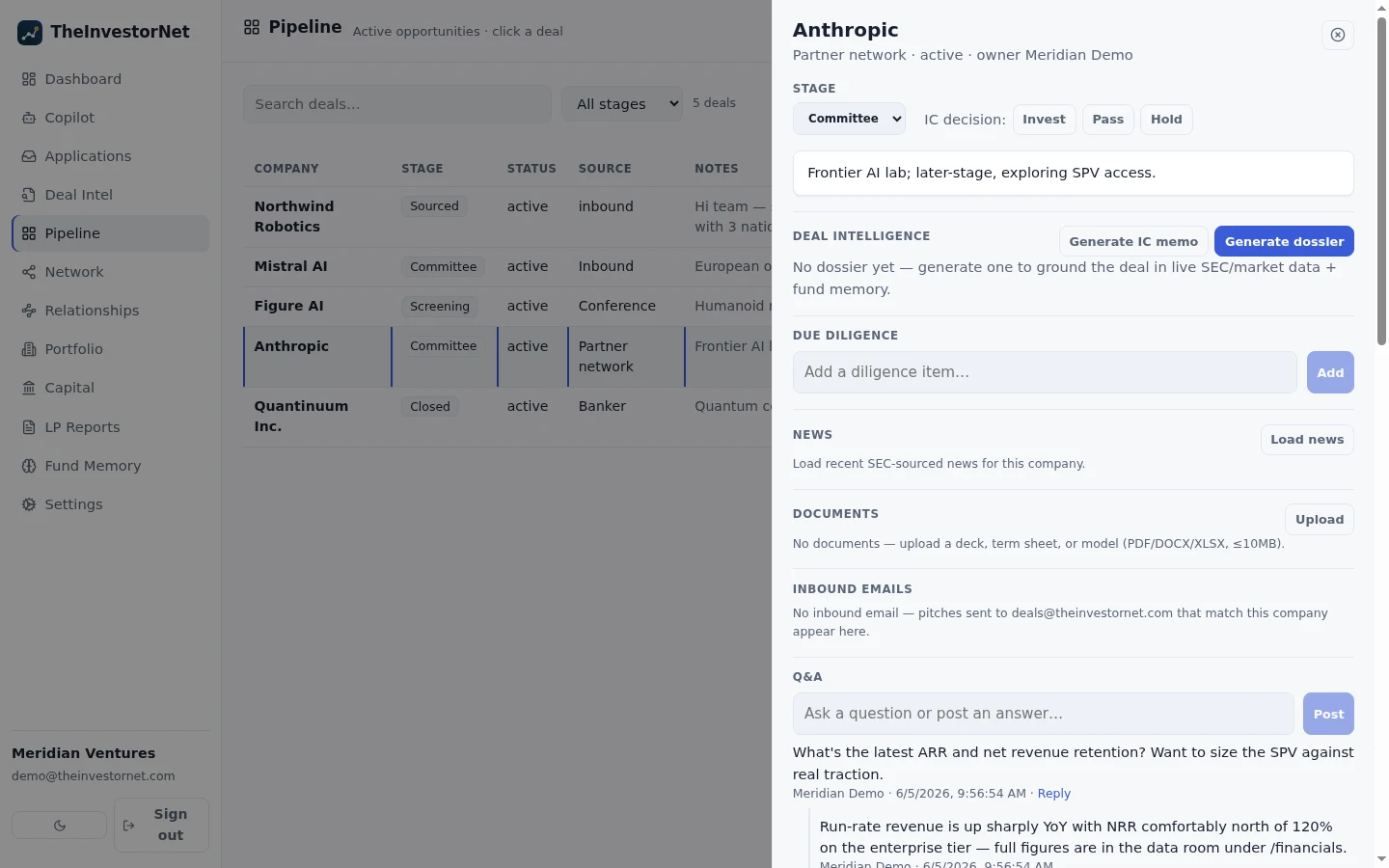
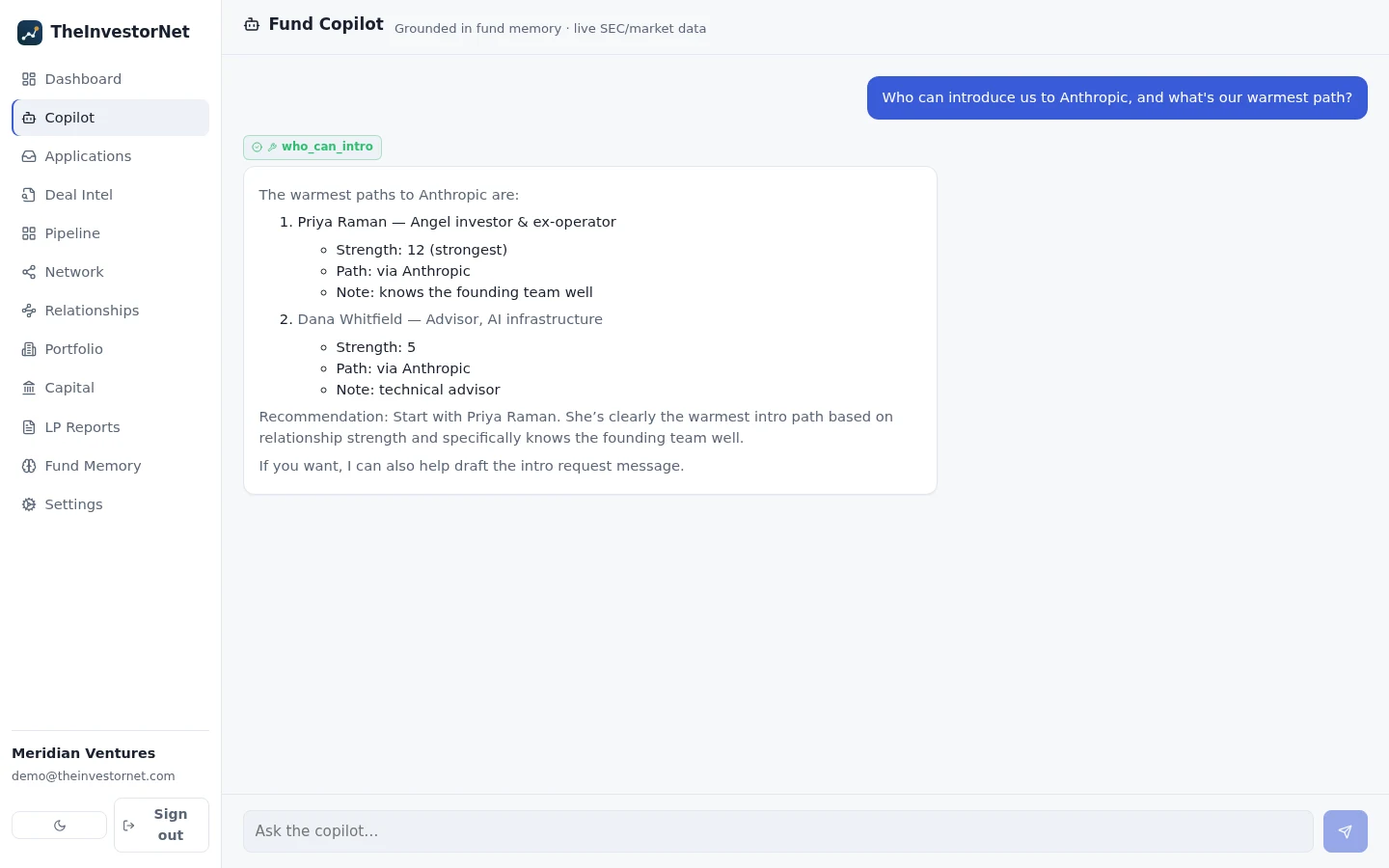
This is where tooling earns its place. The point of structure is to make the disciplined path the path of least resistance: a diligence checklist that won't let a step be skipped under time pressure, a memo template that prompts for the base rate and the premortem risks, and a single record that stores the committed decision next to the evidence it rested on. The structure carries the process so the partners can spend their judgment on the substance.
Putting it together
None of these techniques is exotic, and that is the point — the edge is not in any single tool but in running them consistently, on every deal:
- Anchor on the outside view first. Build a rough reference class and write down the base rate before the narrative takes hold.
- Run a premortem. Independently and in writing, surface why this could fail — then carry that list into the memo and the post-close watch-list.
- Write the rationale at the moment of decision. Thesis, assumptions, base rate, risks, confidence — recorded, not remembered.
- Store it against the deal and review on a cadence. Build decision memory so postmortems compare reasoning to outcomes instead of rewriting history.
Judgment will always matter. But judgment unaided repeats the same distortions deal after deal, while a firm that wraps its judgment in process gets to compound — learning from its own record, tightening its calibration, and turning decision discipline into a durable, hard-to-copy advantage.
Further reading
- Gary Klein — Performing a Project Premortem, Harvard Business Review (2007)
- Reference class forecasting — Kahneman & Tversky's outside view, operationalized by Bent Flyvbjerg
- Shane Parrish / Farnam Street — How a Decision Journal Changed the Way I Make Decisions
- Noise: A Flaw in Human Judgment — Kahneman, Sibony & Sunstein on bias, noise, and decision hygiene
- Base Rates: The Most Ignored Data in Investing — the inside vs. outside view for investors
- Confirmation bias: a fundamental risk to your investing decisions
- Related: Data analytics for portfolio management