Articles · Research
A New Entrant in Venture Investing: How First-Time Managers Build Institutional Credibility from Day One
Emerging managers can outperform — but only the ones LPs can underwrite. A practitioner's guide to what LPs actually diligence in a first-time fund, the fund-formation and operational basics, and how disciplined deal, portfolio, and LP-reporting process substitutes for a long track record.

The uncomfortable paradox of emerging-manager venture is that the data is on your side and the market is not. First-time and small funds have repeatedly produced a disproportionate share of the very best returns — yet in a tightened cycle, LP capital concentrates around brand-name firms, and a first-time GP has to prove an institutional process before there is any track record to point to. This piece is a practitioner-to-practitioner look at how a new entrant closes that credibility gap deliberately: what LPs actually diligence, the fund-formation and operational basics you cannot skip, and how disciplined deal, portfolio, and LP-reporting process stands in for the decade of history you don't yet have.
Why LPs back — and pass on — first-time funds
The case for emerging managers is empirical, not sentimental. Analysis cited from Cambridge Associates has found that a large share of top-performing US venture funds over multiple cycles were run by managers on their first or second fund, and PitchBook benchmarks have shown first-time funds reaching top-quartile and high-IRR outcomes at higher rates than established funds. Carta's own fund-performance data points the same direction at the top of the distribution: in its Q4 2025 VC fund performance report, the smallest funds post the strongest upside — in the 2018 vintage, the 90th-percentile net TVPI for $1M–$10M funds ran well above 4x, versus under 2x for funds of $100M or more. Smaller funds are nimbler, more specialized, more aligned with founders, and have a shorter path to a fund-returning exit.
So why is it the hardest market in a decade to raise a first fund? Because the same data that shows emerging managers can win also shows enormous dispersion — the gap between the best and the median small fund is far wider than for large funds. An LP backing a first-time GP is underwriting variance with no prior fund to anchor on. In a risk-off cycle, many simply default to brands. The emerging manager's entire job, then, is to give an LP something other than a track record to underwrite: a team, an edge, and a process credible enough to make the variance feel intentional rather than accidental.
What LPs actually diligence in a first-time fund
Before there is a DPI number to scrutinize, LP diligence is an assessment of inputs. The ILPA Due Diligence Questionnaire — the industry-standard template institutional LPs send — runs to well over a hundred questions across strategy, team, track record, structure, risk, and operations, and ILPA has been building modules tailored to smaller and emerging managers. For a first-time fund, the answers cluster around four things:
- Team. Who are you, what have you actually done, and will you stay together? With no fund history, the partners' individual operating and investing experience is the track record. LPs probe cohesion and key-person risk hard, because a two-person GP with no succession is a real concern over a 10-year fund.
- Differentiated sourcing. Where does your deal flow come from, and why does it come to you rather than to Sequoia? "Strong network" is an assertion; a documented, recurring, hard-to-replicate sourcing channel — an operator community, a thesis no one else is underwriting, a geography — is an edge.
- Repeatable process. Can you describe how a deal moves from sourced to funded the same way twice? LPs want to see stage gates, a consistent diligence standard, and decision rationale — evidence that wins won't be luck and losses will be learned from.
- Track record, eventually. Even pre-fund, you can assemble an attributable record: angel deals, SPVs, or deals led at a prior firm, with your specific role and the marks documented. Carta and others note that LPs accept an investor track record built outside a formal fund structure — but only if attribution is honest and the math is defensible. Over the fund's life this hardens into the real metrics LPs ultimately judge: TVPI (total value to paid-in) as the fund matures, and DPI (distributions to paid-in) as the proof that paper marks become cash. Carta's data is a sobering reminder of the timeline — across recent vintages, only a minority of funds have returned any DPI even several years in, so for years your process is the only thing an LP can mark.
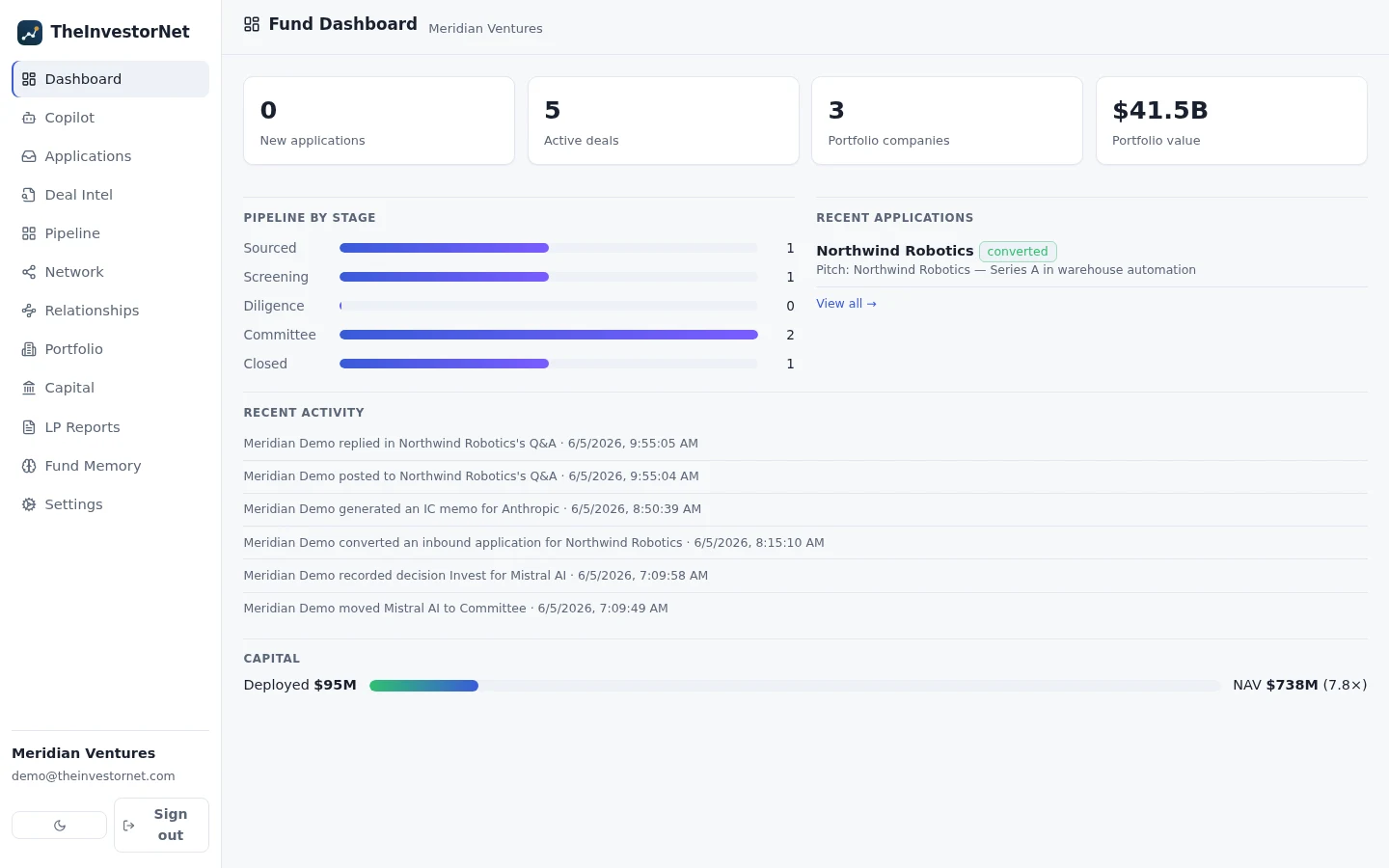
The throughline: every one of these is something you can demonstrate on day one without a single realized exit, if you have been disciplined about capturing it. The emerging manager who treats diligence as a documentation problem — assembling the data room the week the questionnaire arrives — is always on the back foot. The one who has been running an institutional process from the first deal simply exports it.
Fund-formation and operational basics you cannot skip
Credibility also lives in unglamorous operational hygiene, and LPs read sloppiness here as a proxy for how you will steward their capital. The economic and structural terms have converged on a recognizable standard — Sydecar's overview of industry-standard terms for emerging managers and Carta's anatomy of a modern fund structure both describe the same baseline: roughly a 2–2.5% management fee, 20% carried interest over a preferred-return hurdle, a ~10-year term with a 2–3 year investment period, and a GP commitment of around 1% to put real skin in the game. The Limited Partnership Agreement (LPA) is the binding contract that encodes all of it; deviating from market terms without a reason invites questions.
Just as important is the back office a first-time GP often underestimates. A serious fund retains a third-party fund administrator (for capital calls, NAV, distributions, K-1s, and LP reporting), an auditor, and fund counsel — and budgets for them. Launch costs of roughly $50K–$125K through first close, plus meaningful annual recurring costs, are typical for a small fund. Outsourcing the administration is not a luxury; it is the signal that LP capital is handled to an institutional standard rather than tracked in a spreadsheet.
How disciplined process substitutes for a track record
This is the core move available to a new entrant: you cannot manufacture a decade of returns, but you can adopt the discipline of a mature firm immediately — and that discipline is frequently what earns the relationships and the track record. Three habits do most of the work.
Document the decision, not just the deal. Recording the thesis, the diligence, and the rationale for every call — including the passes — creates a track record in real time. It lets an LP see how you think well before there are returns to show how you performed, and it forces the consistency that turns individual good calls into a repeatable method.
Run the portfolio on data, not prose. A first-time fund that monitors its companies with a small, consistent set of metrics — and can roll them into a fund view — looks and behaves like an established shop. This is also where reporting becomes nearly free: the LP narrative is drawn from records you already keep current. We go deep on the specific metrics and cadence in our companion piece on data analytics for portfolio management; the point here is that the same discipline that improves your decisions also produces your LP reporting as a byproduct.
Report like an institution from fund I. Proactive, consistent, well-formatted quarterly updates — on a fixed cadence, with comparable metrics period over period — are how an emerging manager builds the trust that converts a first check into a re-up. LPs invest in fund II based on how you communicated during fund I, long before fund I has a final DPI.
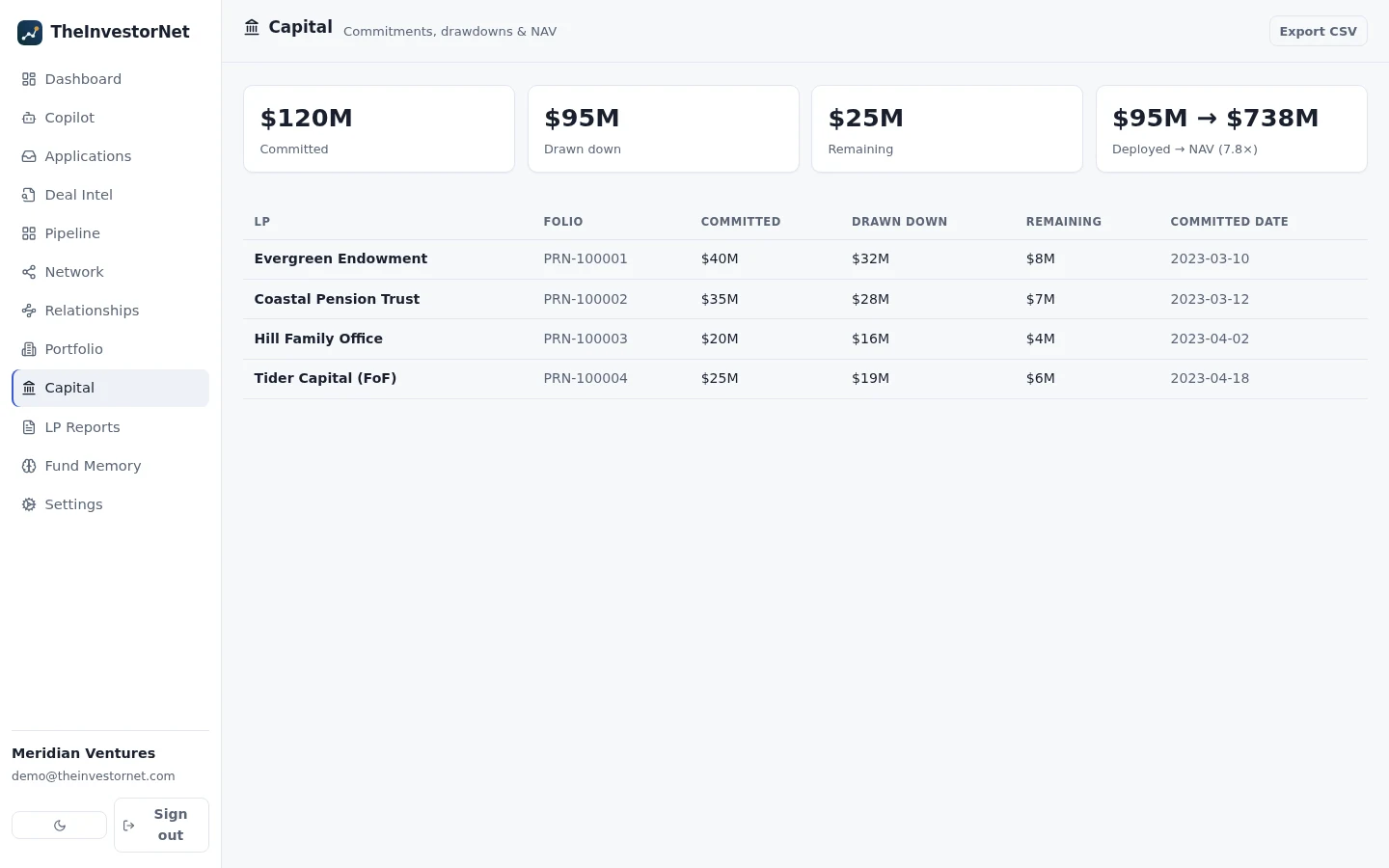
None of this requires the scale of an incumbent. It requires deciding, before the first deal, that the fund will operate to an institutional standard and that every decision, metric, and LP touchpoint will be captured as you go. The emerging managers who break out are rarely the ones with the flashiest thesis; they are the ones an LP could underwrite because the process was legible. The data already says a new entrant can compete on returns. Whether this new entrant gets the capital to try is decided by process — and process is the one thing you can have on day one.
Further reading
- VC is performing better than ever — why so few first-time funds? — PitchBook
- Q4 2025 VC fund performance — Carta (TVPI/DPI by vintage and fund size)
- ILPA Due Diligence Questionnaire and DDQ & emerging-manager modules — Institutional Limited Partners Association
- Track record essentials for emerging fund managers — Carta
- Industry-standard terms for emerging fund managers — Sydecar
- The anatomy of a modern fund structure: LPs, GPs & LLCs — Carta
- Related: Data analytics for portfolio management